
A promising cultivar in one growing region may perform very differently in another. Understanding why is central to Provar’s work and was the focus of research presented by Chad van Wyk at the International Horticultural Congress (IHC2026) in Kyoto, Japan.
Representing Provar alongside fellow researcher Dr Esmé Louw, Chad presented findings from a South African sweet cherry study investigating how genetics and growing conditions interact during early orchard establishment.
Their participation provided an opportunity to share local findings, explore different approaches to familiar production problems and identify new questions relevant to South African fruit production.
Understanding cultivar performance from the first year
Chad’s presentation, Trait-specific genotype × environment interactions during early sweet cherry orchard establishment, examined ten cherry genotypes across three contrasting growing regions in the Western Cape.
The study investigated the relative contributions of genetics, environment and genotype × environment interaction to variation in traits such as bud break, tree vigour and vegetative growth.
The findings showed that the relative influence of genetics and environment varied among traits. Genetics explained much of the variation in tree vigour, while environmental conditions had a stronger influence on bud break progression. Other traits showed more complex responses, including genotype × environment interactions.
For Chad, the timing of these interactions was particularly interesting.
“The interaction effect was already present in the first year. We are working with a crop that is expected to have a productive lifespan of 20 to 30 years, but the interaction effect appears very early.”
This may influence how cultivars are evaluated and recommended. Early performance can reveal how cultivars respond to different growing conditions, but results from one site may not apply elsewhere.
The research is therefore an early step towards a more comprehensive framework for evaluating cultivar responses across environments. Continued evaluation over subsequent seasons will help establish how these early patterns relate to longer-term orchard performance.

Exploring alternatives to conventional rest-breaking treatments
Chad also co-authored a research poster examining alternatives to hydrogen cyanamide and mineral oil in pome fruit production. First author Jan Theron conducted the research as part of his MSc degree during an internship at Provar. The study compared ten rest-breaking treatments across three cultivars and two seasons. Treatments containing hydrogen cyanamide consistently produced higher bud break and return bloom, while vegetable oil showed potential to partially replace mineral oil in hydrogen cyanamide-based programmes.
The findings highlight a growing challenge for South African producers as declining winter chill increases the need for reliable rest-breaking strategies.
A different perspective on familiar problems
Beyond presenting his own research, Chad valued exposure to scientific approaches that differed from those commonly used in South Africa.
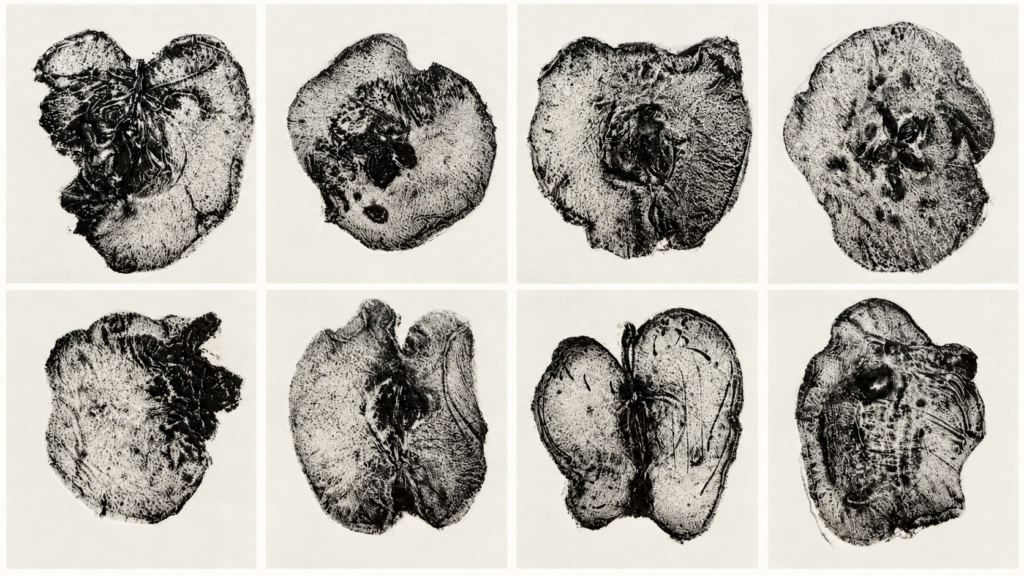
One presentation that stood out was Chayce Griffith’s research on apple bitter pit, which investigated the role of fruit vascular function and plant hormones in the development of the disorder.
The research explored whether maintaining the function of the tissues that transport water and nutrients within the fruit could reduce bitter pit incidence, broadening the discussion beyond calcium applications.
“Sometimes you expect a presentation to offer new information about a familiar problem. This was different because it offered an entirely new approach. That was valuable.”
For Chad, this illustrated an important benefit of international scientific exchange: a different way of framing a research problem can be as valuable as the findings themselves.
It also raises a broader question for local research: could familiar production problems benefit from a different biological or analytical perspective?

Different countries, different priorities
The congress also reinforced Chad’s view that cultivar evaluation must account for the practical realities of the production system in which fruit will be grown and marketed.
He observed that labour shortages are a major concern in Japan, while New Zealand has made considerable progress in using technology to address similar challenges. In the United States, rising labour costs introduce further production pressures.
South Africa faces different constraints, particularly in logistics, storage and export supply-chain reliability.
“We cannot evaluate a cultivar with only a normal storage period in mind. We need to evaluate it with the possibility of much longer storage and unexpected delays.”
Cultivar suitability therefore extends beyond climatic response to include the demands of production practices, labour requirements, storage conditions and market requirements.
For South African producers, this includes maintaining quality through extended storage, transport and possible disruptions to the cold chain.
A broader South African research contribution
Chad’s presentation formed part of a wider contribution from Provar’s research team.
Dr Esmé Louw, senior lecturer and researcher at Stellenbosch University, presented related research on genotype × environment interactions during apple orchard establishment, based on work from an MSc thesis by Tristan Dorfling. Like the cherry study, it examined how genetics, growing conditions and their interaction influence early orchard performance across contrasting environments.
The two studies addressed a shared question: how reliably can cultivar performance be understood without considering the environment in which it is expressed?

Esmé also co-authored a poster examining spur extinction, or the loss of fruiting spurs, in Japanese plum trees. First author Portia Solomon conducted this work as part of her MSc research during an internship at Provar. The study found that genetics was the primary driver of spur loss, while environmental conditions and seasonal variation also contributed.
Together, these studies highlight the value of evaluating plant material across environments to better understand the biological responses underlying cultivar performance.
The South African Delegation
The research drew on the expertise of a wider team. Chad van Wyk and Tristan Dorfling contributed as researchers and writers, with Dr Esmé Louw providing supervision and Dr Iwan Labuschagné co-supervision. Dr Rae Oelofse contributed to research conceptualisation and scientific writing, while Dr Mardé Boyse and Thandokazi Jantjies provided statistical expertise. The posters also showcased work led by former Provar interns Jan Theron and Portia Solomon.
Beyond her own research contribution, Esmé highlighted the prominent South African presence at the congress. Researchers from several local universities attended, particularly from Stellenbosch University’s Department of Horticultural Science, alongside a strong contingent from the Agricultural Research Council (ARC).
The delegation included current postgraduate students and recent and former Master’s graduates now working in key technical roles across the fruit sector. For Esmé, this breadth of research and industry experience was unusual at a high-level, science-driven conference and reflected the talent, skill and passion within the South African fruit industry.

Bringing international perspectives home
Participation in IHC2026 allowed Provar to contribute South African research to international horticultural science and bring new perspectives into local research.
As Chad reflected, the congress offered opportunities to engage with researchers working under different production conditions, learn about challenges in other fruit industries and consider the scientific approaches being used to address them. Such exchanges can help researchers test assumptions, question familiar practices and identify questions that might otherwise be overlooked.
Esmé also emphasised the importance of meeting international colleagues in person to strengthen existing collaborations and identify opportunities for joint research.
For Provar, the value extends beyond presenting findings internationally. It places South African evaluations within a wider scientific conversation while helping to provide a useful basis for testing assumptions, reconsidering familiar approaches and sharpening local research questions.
Ultimately, the value lies not only in presenting South African research internationally, but also in translating what is learned into stronger research and better-informed decisions for the South African fruit industry.

Gina Kuschke is the Sales and Marketing Manager at Provar, where she collaborates closely with the team responsible for the development and market positioning of the Culteva™ platform. Her work involves shaping communication, ensuring clarity and credibility. She is valued by the team for her creative approach to improving internal processes and helping optimise collaboration and efficiency across projects.