From scientific training to independent evaluation
Careers in horticulture are often shaped gradually, through experience rather than single defining moments. For Iwan Labuschagne, the path toward independent evaluation developed over time — beginning with early exposure to plants, followed by formal scientific training, and later shaped by the realities of working in a rapidly evolving fruit industry.
He completed a BSc Agric in Horticulture and Genetics at the University of the Free State, followed by an Honours degree in Genetics. He was subsequently appointed as a breeder at the ARC Infruitec–Nietvoorbij in Stellenbosch, where he bred low-chill apple cultivars and apple rootstocks while completing both his MSc and PhD in Genetics. Those early years provided a strong scientific foundation.
Early experience with mentorship shaped his understanding of how trust and leadership influence both scientific development and professional confidence. A significant shift occurred in 2008, when Iwan moved from the ARC to the private sector at Colors Fruit. The move provided the opportunity to initiate a private apple and pear breeding programme supported by a strong commercial platform. It also enabled international collaboration and exposure to breeding programmes and germplasm collections in Europe and the United Kingdom.
At the same time, it sharpened his awareness of a growing industry challenge.
The South African fruit industry regularly imports large numbers of new cultivars, particularly in crops such as apples, within short timeframes. While early performance data were available, these datasets were frequently limited to specific environments or seasons. While this influx drives innovation, it also increases risk. Orchards represent long-term investments, and the cost of incorrect decisions can take years to recover.
By 2013, Iwan chose to transition from breeder to independent evaluator — a shift that revealed a clear opportunity to serve individual clients while contributing more broadly to the deciduous fruit industry.
That decision laid the foundation for Provar.

Establishment of Provar
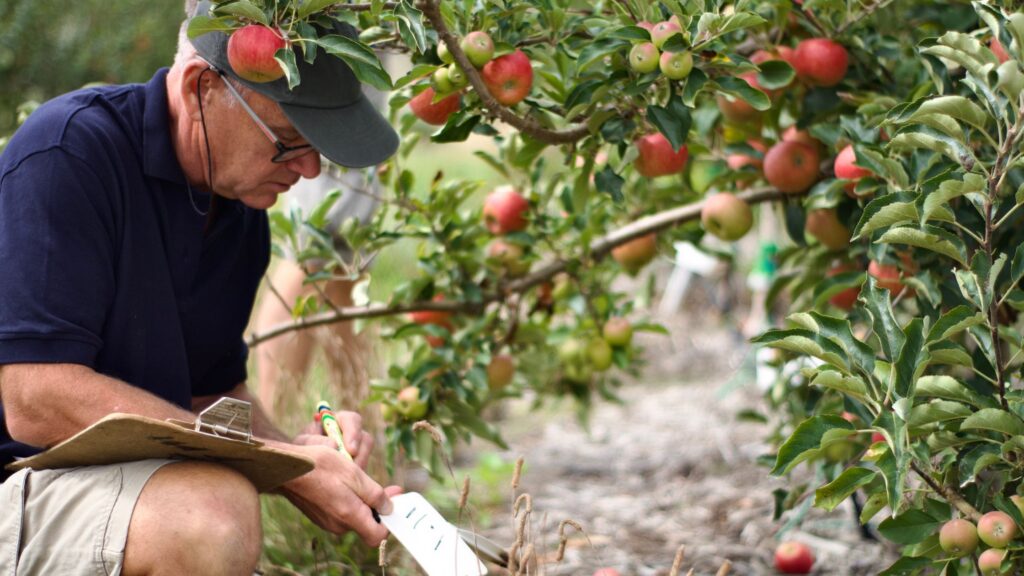
Rather than positioning itself as a breeding or commercial entity, Provar was established as an independent evaluation company, focused on providing scientifically rigorous, unbiased assessments of cultivars and rootstocks across multiple environments and production systems. Its purpose was to improve the quality of decision-making. Drawing on his background in breeding, Iwan viewed evaluation as a disciplined extension of applied genetics. Selection, after all, depends not only on identifying promising material, but on understanding how consistently it performs under real production conditions.
“Evaluation is not about proving something works,” he explains. “It is about understanding where it works, how consistently and under what conditions.”
From the outset, Provar positioned itself as an independent platform, capable of evaluating a wide range of fruit crops across multiple environments. Credibility was central to this role. Methodologies were standardised, data handling was transparent, and conclusions were framed conservatively.
“There is often pressure to draw conclusions early,” Iwan notes. “But if the data do not support it yet, then the responsible answer is to wait.”

This reliability became part of Provar’s identity. Independence was not defined by opposition to innovation, but by commitment to evidence. Knowing when not to make recommendations was considered just as important as identifying promising material. Support from early clients such as Core Fruit and Culdevco, SAPO and TopFruit along with industry bodies including Hortgro and SATI, helped establish a strong foundation. Collaboration with growers and industry partners enabled the development of evaluation orchards that would underpin Provar’s work in the field.
As the scope of evaluation expanded, practical challenges emerged. Managing data across sites, seasons, traits and images highlighted the limitations of traditional, paper-based systems. Inconsistent data capture and fragmented reporting risked undermining even the most carefully designed trials. The response to that challenge would later become the software data collection product, CultevaTM.

People, continuity and building capacity beyond individuals
While independent evaluation depends on sound methodology, its credibility ultimately rests on people. From its early years, Provar operated with a small, committed team, where responsibility was shared, and accountability understood. Iwan’s leadership philosophy placed strong emphasis on innovation, empowerment and trust. He viewed the workplace as a powerful environment for creativity and personal development — provided individuals were given the freedom to grow, question and take responsibility for their work.
“The data we generate influences real planting decisions,” he says. “That carries responsibility.”

This perspective shaped Provar’s approach to mentorship. Over the years, Iwan co-mentored a significant number of MSc students and several interns, some being part of a long-term Hortgro funded project investigating the adaptability of cultivars grown under different production areas. Many of whom entered the programme without a clear pathway into the fruit industry. The focus was not on accelerating output, but on building judgement, confidence and professional maturity.
“All of them had to learn that not every dataset leads to an answer,” he explains. “Sometimes it leads to better questions.”
To date, every student associated with Provar has gone on to secure employment within the industry. In this way, mentorship became part of Provar’s broader contribution — strengthening industry capacity beyond the organisation itself. People development also influenced how leadership evolved internally. Rather than consolidating decision-making, responsibility was gradually distributed. As Provar matured, continuity became a practical concern.

Ensuring that the organisation could remain credible and independent beyond any single individual was essential. Leadership transition was therefore approached deliberately, with an emphasis on responsibility and readiness rather than hierarchy. When speaking about the next generation of Provar’s leadership, Iwan emphasises their confidence and willingness to take responsibility.
“Their confidence as emerging leaders, combined with their commitment to take responsibility, convinced me they are ready for the next growth phase of Provar,” he says. Creating space for them to develop their own leadership styles was intentional, rather than prescribing a rigid structure. “I wanted to give them the freedom to discover their own roles and strengths.”

The same philosophy applies to CultevaTM. While the platform supports standardised data capture, interpretation remains the responsibility of skilled evaluators. Technology, in Iwan’s view, should strengthen credibility rather than replace understanding.
Looking ahead, Provar’s focus remains on maintaining independence, strengthening research capacity, and contributing credible scientific outputs to the industry. CultevaTM will continue to evolve cautiously, responding to real evaluation challenges while remaining grounded in science. Provar’s competitive advantage lies in the integration of independent science, long-term datasets, horticultural expertise, and digital innovation.
“This combination enables Provar to transform complex agricultural data into trusted, decision-grade insights that improve real-world industry outcomes”.
For Iwan, stepping back from day-to-day leadership reflects a shift rather than an endpoint — toward safeguarding systems, people and principles that allow independent evaluation to remain relevant as the industry continues to change.


Rae is the Scientific Publications and Research Conceptualisation Lead at Provar. She is a qualified horticulturist, scientific writer and editor and holds a doctorate in plant breeding. In her role, she works at the intersection of scientific research and applied evaluation, developing research concepts, trial designs, and strategies for implementation. Rae also plays a key role in the scientific development of Provar’s Culteva™ platform, creating literature-based concepts to ensure scientific rigour. Additionally, she supports Provar’s scientific publications, technical reports, conference materials, project planning and research funding applications, collaborating across various disciplines and organisations.